The Industry Leader in Mission-Specific Forged Wheels: 15-Day Prototyping & 12,000-Ton Strength.

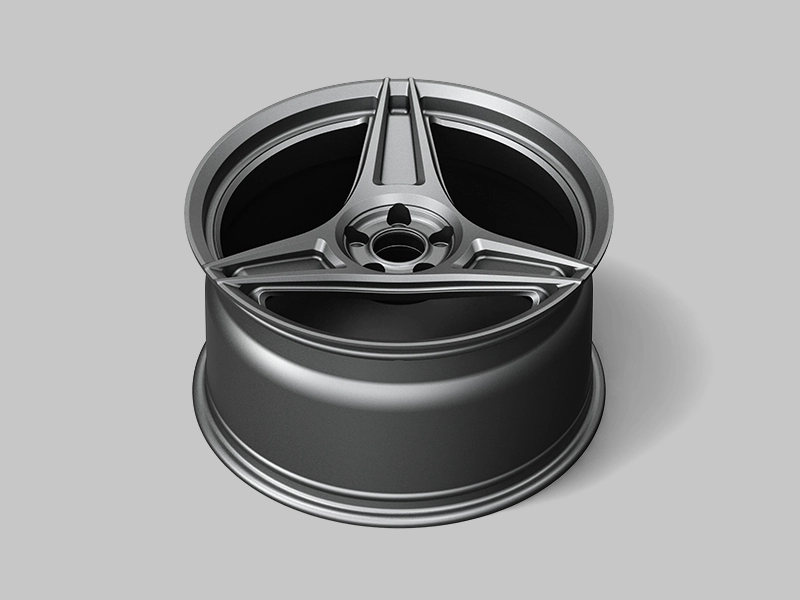


Tri Flow
MG-T02
The MG-T02 Tri Flow links the hub and rim through three broad curved spokes. A simple center and deep outer profile create a concentrated, experimental performance stance with generous open space. It is a differentiated direction for racing concepts and premium customization.
Application: Minimal Racing / Performance Concept
Finishes: ![]()
5.0
design customization
Please fill out the form below to request a quote or to request more information about us. Please be sure to upload customized requirement documents or pictures, and we will get back to you as soon as possible with a response. we're ready to start working on your new project, contact us now to get started.
Please fill out the form below to request a quote or to request more information about us. please be as detailed as possible in your message, and we will get back to you as soon as possible with a response. we're ready to start working on your new project, contact us now to get started.
A Clear, Professional Path To Your Custom Forged Wheels
We bring design, engineering review, and manufacturing into four clear steps — turning your idea into a forged wheel solution built around your project requirements.
01
Select A Design Or Send Your Reference
Choose from our existing wheel designs, or send us an image, sketch, or design file you like. Our design team will develop the right direction based on your vehicle, brand style, and application requirements.
02
Confirm Vehicle Fitment & Engineering Data
Once the design direction is confirmed, our engineering team will review the vehicle and fitment requirements, including wheel size, bolt pattern, center bore, offset, wheel width, and brake clearance.
03
Review Your Custom Wheel Proposal
Based on the approved design and fitment data, we will finalize the spoke structure, wheel proportions, design details, and custom specifications. The completed proposal will then be presented for your review and approval.
04
Select the Finish & Move Into Production
Choose your preferred color and finish, including gloss, satin, brushed, metallic, or two-tone options. After final approval, your project will move into our organized manufacturing, finishing, and delivery preparation process.
Product technology
Isothermal Forging
The core of a Magnesium Wheel is not simply replacing one material with another. It is the controlled relationship between alloy, temperature and forming. An isothermal forging route can support complex magnesium wheel forming, microstructural consistency and dimensional stability within a controlled temperature window. Alloy grade, die temperature, heat treatment and performance results are specification-specific.
ThermoMap Thermal-Zone Engineering
ThermoMap Track Thermal-Zone Engineering brings brake-adjacent areas, spokes, rim and center zones into one thermal-cycle review. By connecting heat-affected areas with structural, coating and fatigue validation, the system establishes clearer development boundaries for magnesium racing wheels.
PEO/MAO Ceramic Surface Protection
The lightweight potential of a magnesium wheel must be supported by a controlled surface-protection system. CorrosionGuard can be developed around PEO/MAO ceramic-like oxidation, pore sealing, primer treatment and a specified topcoat, with attention to rim edges, bolt holes, spoke backs and machined areas. Coating system, corrosion performance, wear resistance and repair behavior must be supported by the actual process and test documentation.
{{item.score}} Stars
{{item.pre}}%
{{item.nickname ? (item.nickname.slice(0, 2) + '*****') : item.source === 1 ? 'mall buyer' : '--'}}
{{item.comment_time}}
Review in the {{item.country}}
{{itemAttr.params_key}}: {{itemAttr.params_value}}
Ready to forge the futu
Latest resources
Pure carbon fiber is not the challenge; the real challenge lies in manufacturing a hybrid-material wheel hub capable of withstanding a 2-metric-ton load while cruising at 300 km/h.
2026
10
27
If aluminum alloy is the cornerstone, then AZ80 magnesium alloy is the exclusive blade custom-forged for the podium.
2026
10
27
In the high-performance wheel industry, the 6061-T6 aluminum alloy is regarded as the pinnacle of "engineering balance." As a precipitation-hardening aluminum alloy, its core chemical components—magnesium and silicon—form Mg₂Si strengthening phases under specific processing conditions, thereby endowing the wheels with exceptional yield strength.
2026
10
27
A practical guide to carbon-fiber texture, manufacturing logic, and visual identityFor tuning shops, distributors, OEM/ODM brands, performance drivers, and technical buyers
2026
10
13
More ECL Wheels
Copyright © 2026 ROC FORGED | RACING ON CREATIVITY |Sitemap